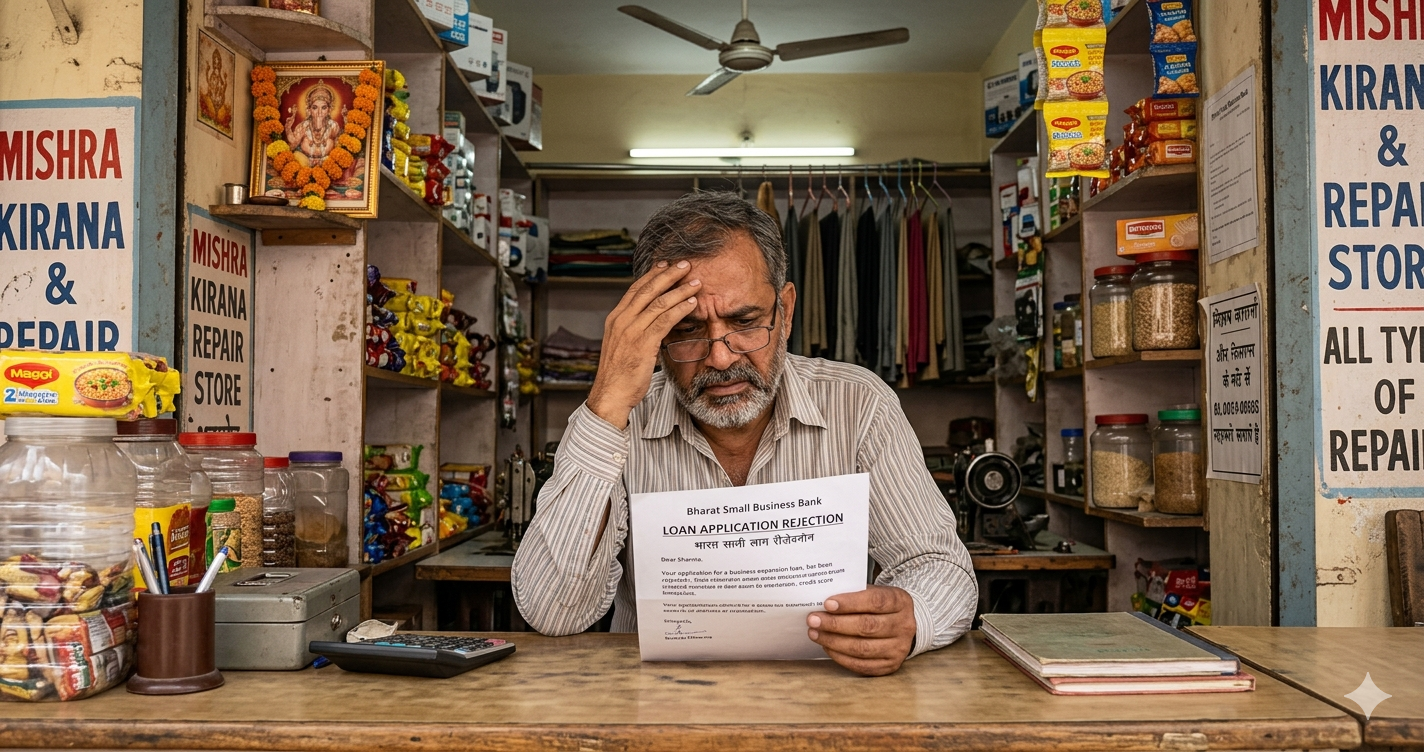
You heard about the government’s Pradhan Mantri Mudra Yojana (PMMY). You walked into the bank with confidence. And then — rejection. If this happened to you, you are not alone. Thousands of Mudra loan applications are rejected every month across India. The good news: most rejections are fixable. This guide tells you exactly why — and what to do about it.
Sources: mudra.org.in | pib.gov.in | FlexiLoans MSME Report 2025
📋 What You Will Learn
The Pradhan Mantri Mudra Yojana (PMMY) was launched on 8 April 2015 to provide collateral-free loans to small and micro businesses across India. The scheme offers four categories — Shishu (up to ₹50,000), Kishore (up to ₹5 lakh), Tarun (up to ₹10 lakh), and Tarun Plus (up to ₹20 lakh for repeat Tarun borrowers). Loans are not given by MUDRA directly — they are disbursed through banks, Regional Rural Banks (RRBs), Non-Banking Financial Companies (NBFCs), and Micro Finance Institutions (MFIs).
This is the critical point many applicants miss: even though Mudra loans are government-backed, the lending decision is made entirely by the bank. The bank evaluates your creditworthiness, documents, business viability, and repayment capacity — just like any other loan. Being a government scheme does not guarantee approval.
Below are the 7 most common and verified reasons why Mudra loans get rejected — and what you can do to fix each one.
1 Low or No CIBIL Score
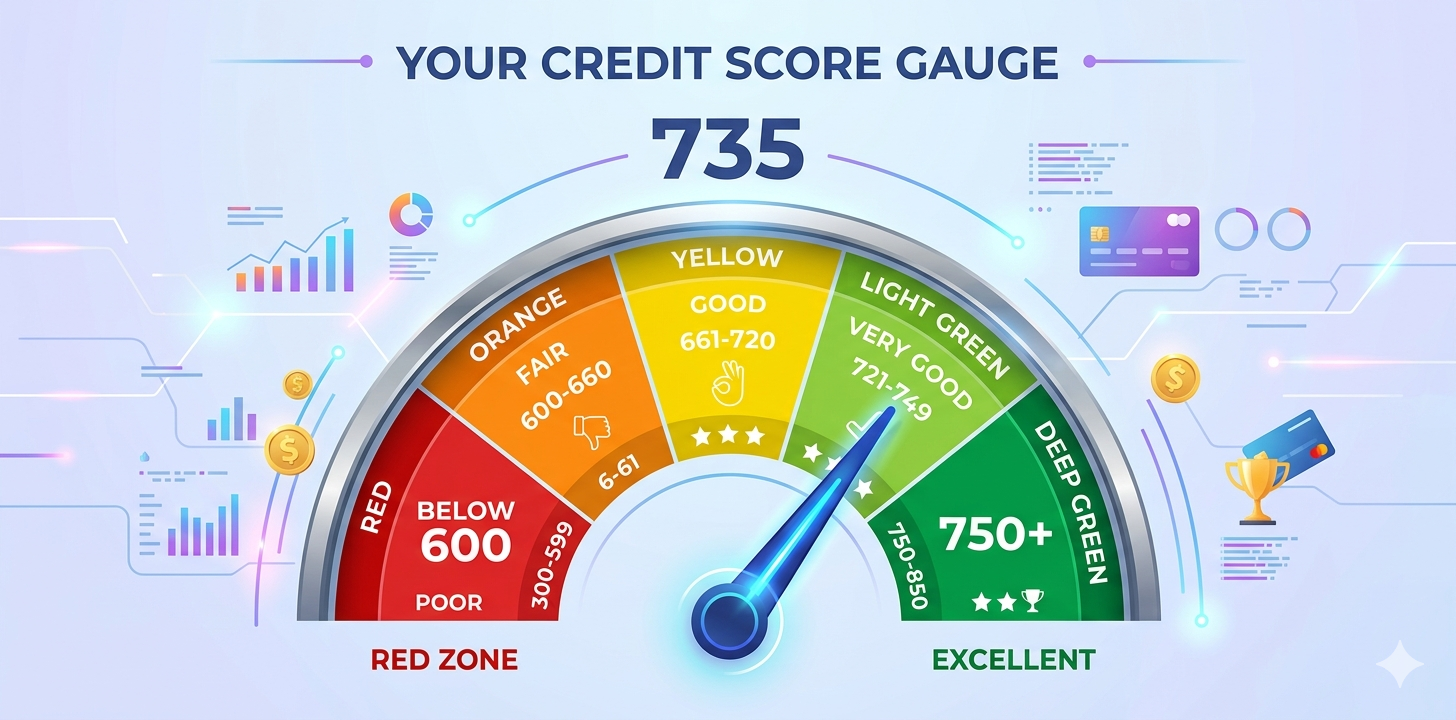
Your CIBIL score is the first thing a bank checks when you apply for any loan — including a Mudra loan. CIBIL is a three-digit number ranging from 300 to 900 that reflects your credit behaviour: how consistently you repay loans, credit card bills, and EMIs.
Although the official PMMY guidelines do not specify a minimum CIBIL score, the practical reality is different. Based on general banking practices across India:
- Above 700: Good chances of approval
- 650–699: Possible, but the bank will scrutinise other factors closely
- Below 650: Most banks will reject the application
- Below 600: Approval is nearly impossible
Even a defaulted mobile EMI, a bounced cheque, or a missed credit card payment reduces your CIBIL score. The bank sees this as a pattern of financial indiscipline — and for an unsecured loan like Mudra, they cannot afford the risk.
If you have no credit history at all — meaning you have never taken a loan or used a credit card — this also creates a problem. Banks have no data to assess your repayment behaviour.
- Check your CIBIL score for free at cibil.com once a year.
- If your score is low due to past defaults, clear those dues first and wait 3–6 months before reapplying — your score improves after dues are settled.
- If you have no credit history, start small: take a low-limit credit card from your bank, use it for small purchases, and repay the full amount every month for 6 months. This builds your score.
- For Shishu loans (up to ₹50,000), some banks and MFIs are more flexible on CIBIL. Apply at your home-branch bank where your salary or business account is maintained — they know your transaction history.
2 Mismatched or Incomplete Documents
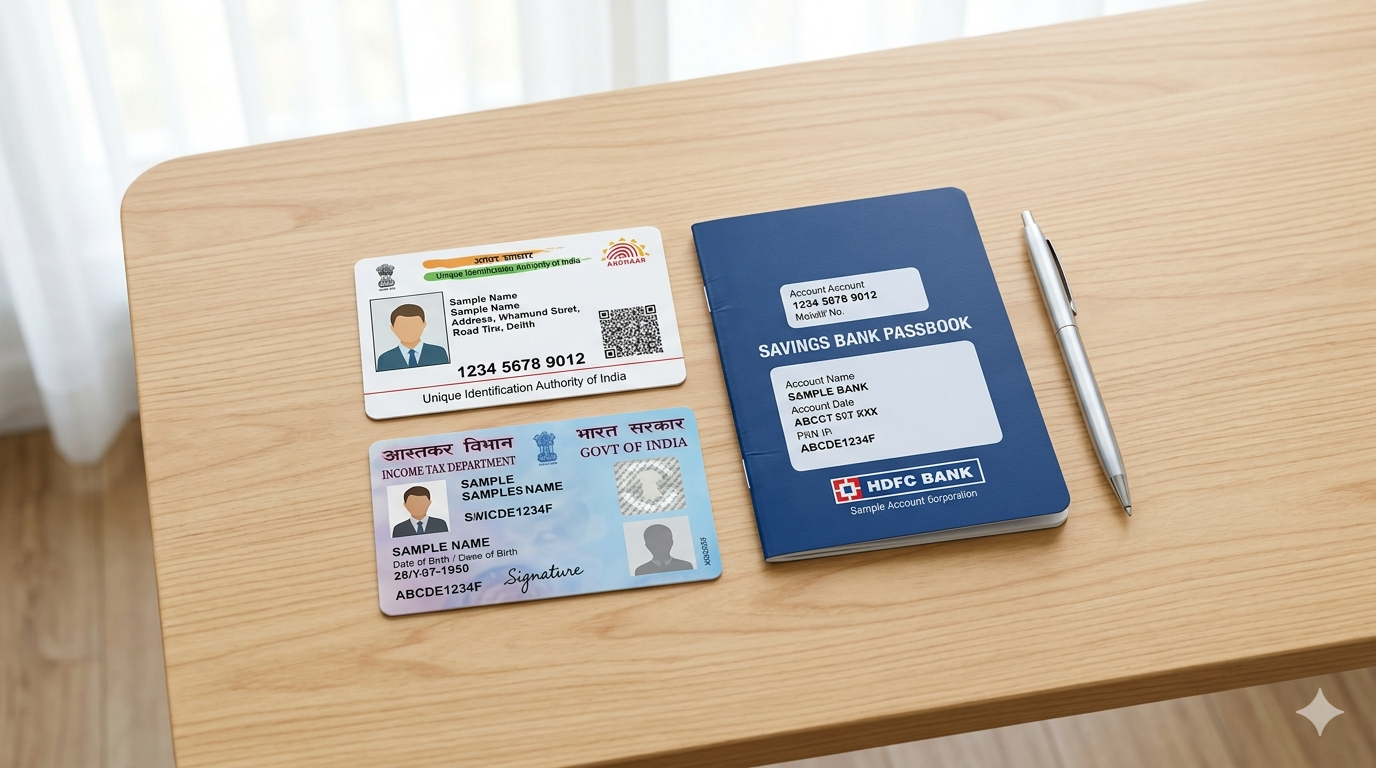
Incomplete or mismatched documents are the single most common cause of Mudra loan rejection across India. Banks run strict Know Your Customer (KYC) checks. Even a small mismatch — like a different address on your Aadhaar card versus your shop’s rental agreement — can result in automatic rejection.
Common document mismatches that cause rejection:
- Address on Aadhaar does not match address on rental agreement or utility bill
- Name on PAN card differs slightly from name on Aadhaar (e.g., middle name missing)
- Business address proof is outdated or in someone else’s name
- Bank statements submitted are not for the past 6 months as required
- Passport-size photographs are old or not of the required size
- For Kishore and Tarun loans: business plan or project report is missing
- Update your Aadhaar address to match your current business or residential address at uidai.gov.in before applying.
- Ensure your name is spelled identically on all documents. If there is a mismatch, file a correction with the relevant authority first.
- Collect bank statements for the last 6 months from your bank before applying — do not rely on downloaded PDFs that some banks reject.
- For Kishore and Tarun loans, a basic business plan is required — we cover this in Reason 6 below.
3 Your Business Activity Is Not Eligible Under PMMY
Mudra loans are designed for non-farm, non-corporate income-generating activities. This means certain business types simply do not qualify — no matter how strong your application is. Many applicants are unaware of this restriction and face rejection without understanding why.
Activities that are NOT eligible for Mudra loans:
- Crop loans and direct agricultural activities (farming, cultivation)
- Land improvement activities — canals, irrigation, wells
- Pure trading activities with no value addition (in some bank interpretations)
- Activities already funded under other specific government schemes
Activities that ARE eligible (illustrative list):
- Shops, trading, and retail businesses
- Manufacturing units — food processing, textiles, handicrafts
- Service businesses — salons, tailoring, repair shops, DTP centres, courier services
- Transport vehicles — auto-rickshaws, taxis, e-rickshaws, small goods vehicles (commercial use only)
- Allied agricultural activities — poultry, dairy, beekeeping, fishery, agro-processing
- Before applying, confirm your business type is eligible at mudra.org.in.
- If you are a farmer also running an allied activity (e.g., poultry or dairy alongside farming), the allied activity portion is eligible — apply specifically for that.
- If your primary activity is crop farming, Mudra is not the right scheme. Check the PMEGP scheme or Kisan Credit Card scheme instead.
4 No Proof of Business Operations
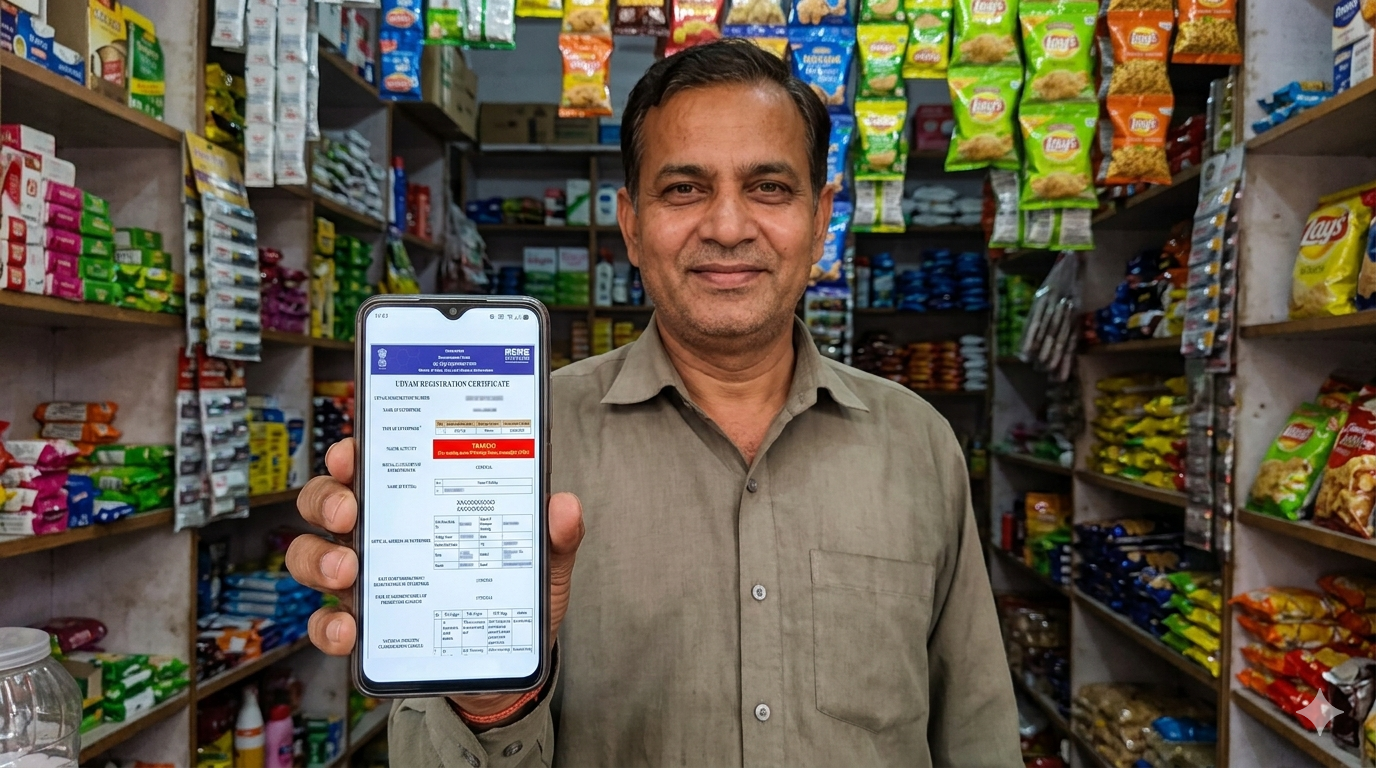
One of the most underestimated reasons for rejection: the bank is not convinced that your business actually exists and is currently operating. For an unsecured loan with no collateral, the bank needs evidence that there is a real income-generating business behind the application.
If you walk in with only your Aadhaar and PAN card and say “I want to start a business,” most banks will reject your Kishore or Tarun application. The bank needs to see:
- Udyam Registration certificate (increasingly required by most banks)
- GST registration (for businesses above the GST threshold)
- Shop and Establishment Act licence
- A current account with business transactions
- At least 6 months of business transaction history in your bank account
- Get your Udyam Registration done first — it is completely free and takes under 30 minutes at udyamregistration.gov.in. This is the single most important step before any government loan application. Read our full guide: Udyam Registration — Complete Guide.
- Open a dedicated current account for your business (separate from your personal savings account) and maintain it for at least 3–6 months with regular transactions before applying for Kishore or Tarun loans.
- Obtain a local business licence (Shop and Establishment Act) from your municipality — this is simple, low-cost, and accepted by all banks as business proof.
5 Existing Loan Default on Your Record
This is the most direct rejection trigger. If you have defaulted on any previous loan — whether it is a personal loan, a home loan EMI, a previous Mudra loan, or even a small two-wheeler loan — the bank will see it in your CIBIL report and reject your application immediately.
The official PMMY eligibility criteria state clearly: the applicant must not have a history of defaulting on loans with any bank or financial institution.
A default means you missed 3 or more consecutive EMI payments, and the loan was classified as a Non-Performing Asset (NPA) by the bank. Even if the default happened years ago, it stays on your CIBIL report for up to 7 years.
- Check your CIBIL report for any outstanding or defaulted loans. Download your free annual report at cibil.com.
- If a default exists, contact the lender and negotiate a settlement or full repayment. Once paid, request a No Objection Certificate (NOC) and ask the bank to update CIBIL.
- After settling a default, wait at least 6–12 months before reapplying for a Mudra loan. Your score improves gradually after settlement.
- If the default is wrongly reported (not your fault), raise a dispute directly with CIBIL — they are required to investigate and correct within 30 days.
6 Weak or Missing Business Plan
For Kishore (above ₹50,000) and Tarun (above ₹5 lakh) category loans, banks require a basic business plan or project report. This is non-negotiable. Without it, your application will not move forward — regardless of your credit score or documents.
Many applicants submit a vague one-page description like “I want to open a shop and sell goods.” Banks need much more than this. They want to understand:
- What exactly your business does and how it generates income
- How much money you need and for what specific purpose (machinery, raw materials, working capital)
- What your monthly income and expenses will be
- How you plan to repay the EMIs
- What your existing monthly revenue is (for existing businesses)
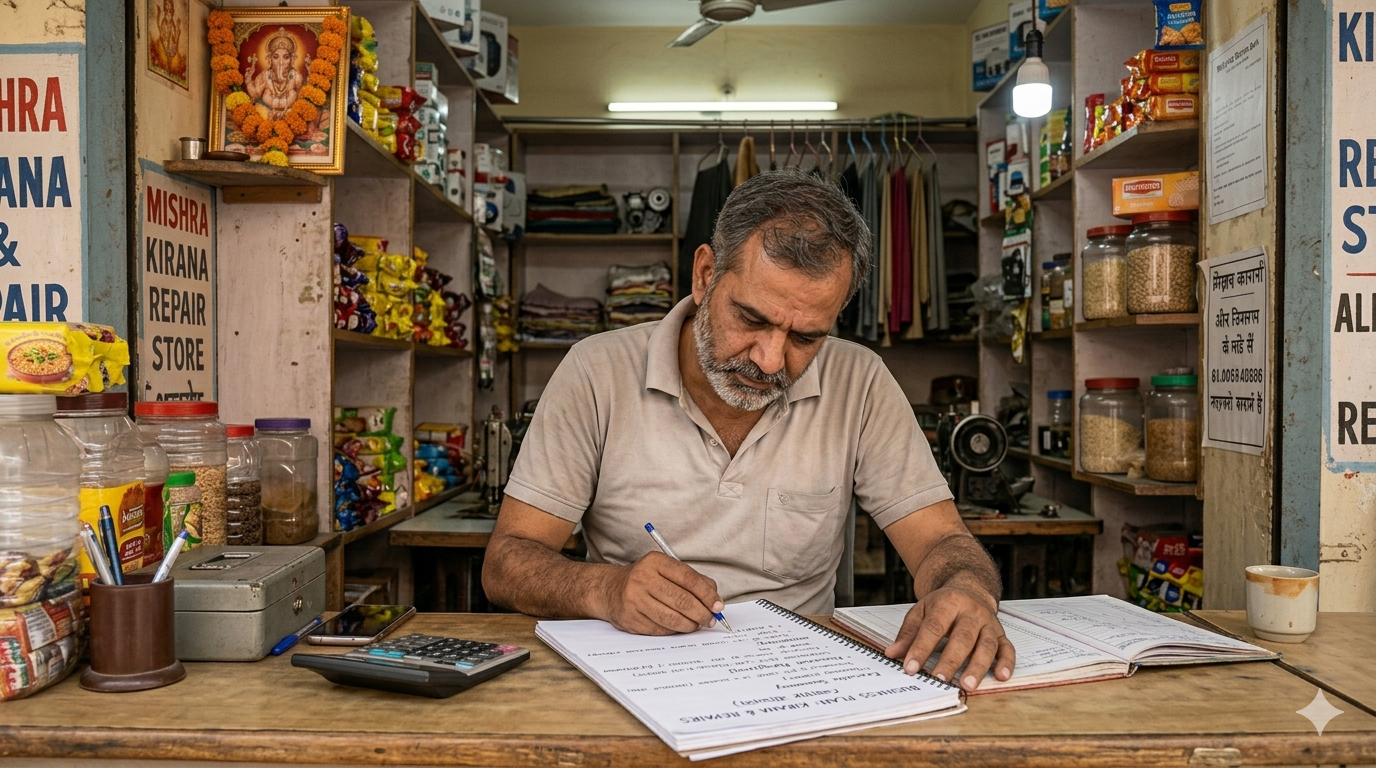
Your business plan does not need to be elaborate. For most Mudra loan applications, a 2–3 page document covering the following is sufficient:
- Business description: What you do, where you operate, how long you have been in business
- Purpose of loan: Exactly what you will buy with the money (e.g., “Purchase 1 industrial sewing machine for ₹85,000”)
- Monthly income estimate: How much revenue your business generates or will generate
- Repayment plan: Show that your monthly income covers the EMI comfortably
- Market information: Brief note on your customers and why there is demand
Your nearest District Industries Centre (DIC) office provides free business plan templates. You can also download sample project reports from kviconline.gov.in.
7 Wrong Category or Unjustified Loan Amount
Applying for more than your business can justify is a common mistake — and a direct cause of rejection. If you are a first-time entrepreneur with no business history and no revenue, applying for a ₹10 lakh Tarun loan is very unlikely to succeed. The bank sees no evidence that you can repay such an amount.
Similarly, many applicants apply at the wrong type of institution. Mudra loans are available through:
- Public sector banks: SBI, PNB, Canara Bank, Bank of Baroda, Union Bank
- Private banks: HDFC Bank, ICICI Bank, Axis Bank
- Regional Rural Banks (RRBs)
- NBFCs and MFIs
For small Shishu loans in rural areas, an MFI or RRB often has faster and more flexible processing than a large private bank. Going to a large private bank for a ₹50,000 loan is not always the best strategy.
- Start with the right category: New business with no revenue history → start with Shishu. Growing business with 1+ year history → apply for Kishore. Established business with strong revenue → apply for Tarun.
- Match the loan amount to your need: Apply for exactly what you need for a specific purpose — not a round number you guessed. A request for ₹78,000 for a specific machine (with a quotation) is more credible than a request for “₹1 lakh for business.”
- Apply at the right institution: For Shishu loans, try MFIs or your local cooperative bank. For Kishore and Tarun, approach your home-branch public sector bank. Apply online at udyamimitra.in to compare lender offers simultaneously.
Quick Reference: All 7 Reasons and Their Fixes
| # | Reason for Rejection | How to Fix | Time to Fix |
|---|---|---|---|
| 1 | Low CIBIL score (below 650) | Clear dues, build credit history | 3–12 months |
| 2 | Mismatched / incomplete documents | Update Aadhaar address, correct name mismatches | 1–4 weeks |
| 3 | Ineligible business activity | Check eligible activity list at mudra.org.in | Immediate |
| 4 | No proof of business operations | Get Udyam Registration (free, 30 min) | Same day |
| 5 | Existing loan default | Settle dues, get NOC, wait 6–12 months | 6–18 months |
| 6 | Weak / missing business plan | Write 2–3 page plan with revenue and repayment projection | 1–3 days |
| 7 | Wrong category / unjustified amount | Start with right category, match amount to specific need | Immediate |
Your Pre-Application Checklist — Before You Walk Into the Bank
- CIBIL score is above 650 (check at cibil.com)
- Udyam Registration is complete (udyamregistration.gov.in)
- Aadhaar address matches your business or home address
- PAN card name matches Aadhaar name exactly
- Business bank account has at least 3–6 months of transactions
- Bank statements for last 6 months are printed and ready
- Business proof is available (shop licence, Udyam certificate, GST if applicable)
- Business plan is written (for Kishore and Tarun loans)
- Loan amount is justified with a specific purpose (quotation if buying equipment)
- Business activity is on the eligible list at mudra.org.in
Check Your Mudra Loan Eligibility in 60 Seconds
Use MSMEGyan’s free eligibility calculator to find out which Mudra category you qualify for — Shishu, Kishore, Tarun, or Tarun Plus.
Check My Eligibility →Related Guides on MSMEGyan
- 📋 Udyam Registration — Complete Free Guide 2025
- 🏭 PMEGP Loan — How to Get 15–35% Government Subsidy
- 🛡️ CGTMSE — Collateral-Free MSME Loans Up to ₹10 Crore
- 🔨 PM Vishwakarma Yojana — Eligibility, Loan & Benefits
Frequently Asked Questions
Conclusion
Getting rejected for a Mudra loan is discouraging — but it is rarely the end of the road. The seven reasons covered in this guide are all fixable. The most common issues — low CIBIL score, document mismatches, and lack of Udyam Registration — can be resolved within days or weeks.
The single most important step you can take right now, regardless of your situation, is to get your Udyam Registration done. It is free, takes 30 minutes, and is the foundation of almost every government business loan scheme in India.
Once you have fixed the relevant issues, apply online at udyamimitra.in — India’s official government portal for Mudra loans — where you can compare offers from multiple lenders at once.
Ready to Apply? Check Your Eligibility First
MSMEGyan’s free Mudra loan eligibility checker tells you which category fits your business — in under 60 seconds.
Check Eligibility Free →Disclaimer: This article is for general informational purposes only. Loan approval is at the sole discretion of the lending institution. Scheme details are verified from official sources — mudra.org.in and pib.gov.in — as of May 2025. Please verify current guidelines at mudra.org.in before applying. MSMEGyan does not charge any fee for guidance or scheme information.
Pingback: Mudra Loan Rejected Due to Incomplete Business Plan (2026)
Pingback: Mudra Loan Verification for Rented Business Premises (2026)
Pingback: Update Your Project Report Before Mudra Loan Reapplication
Pingback: Mudra Loan Reapplication: 25 Checks for Fresh Approval 2026
Pingback: Mudra Loan Approved After Rejection: Case Study (2026)
Pingback: Mudra Loan Approval After Correcting Project Report
Pingback: Mudra Loan Success Story: Missing Documents to Approval